
Essential Filipino Soup Ingredients for Home Cooks
Share
A pot of sinigang is not built from a random sour ingredient, and a good batch of pancit mami does not start with just any noodle. The essential Filipino soup ingredients in a home pantry make the difference between a broth that is merely warm and one that tastes familiar from the first spoonful. For Filipino households in the US, keeping a few dependable staples on hand means comfort food is never far away - whether dinner calls for sinigang, nilaga, tinola, arroz caldo, or a quick noodle soup.
Essential Filipino Soup Ingredients to Keep Stocked
Filipino soups cover many styles. Some are clear and ginger-forward, some are deeply savory, and others get their character from a bright sour broth. Rather than buying ingredients for only one recipe, stock the flavor builders that appear across several dishes. Fresh meat, seafood, and vegetables can change with the season, but pantry staples give each soup its recognizable Filipino base.
Fish sauce for savory depth
Patis, or fish sauce, is one of the most useful seasonings in Filipino cooking. A small amount adds saltiness and savory depth to tinola, nilaga, arroz caldo, munggo, and many vegetable soups. It is usually added early, often after sauteing aromatics, so its flavor can blend into the broth instead of sitting on top of it.
Brands such as Rufina and Squid are familiar choices for many Filipino kitchens. Fish sauce varies in strength and aroma, so start modestly and taste as the soup cooks. If a recipe already includes a seasoning mix, bouillon, or salty cured meat, reduce the patis at first. You can always add more at the table.
Tamarind and other souring agents
For sinigang, the sourness is the point. Tamarind soup base or sinigang mix offers a convenient, consistent result, especially when fresh sampalok is not available. Knorr Sinigang sa Sampalok Mix is a practical pantry staple for pork, beef, shrimp, fish, or vegetable sinigang.
There is room for preference here. Some cooks use more mix for a sharper broth, while others keep it gentler so the flavor of pork ribs, salmon, or shrimp comes through. Fresh or frozen tamarind gives a more natural fruitiness, but packaged mix is faster for weeknight cooking. Other regional souring ingredients, such as kamias or guava, create different flavors and are worth using when available. They are not direct substitutes for tamarind - each gives sinigang its own character.
Ginger, garlic, and onion
These fresh aromatics are the foundation of many soothing Filipino soups. Ginger is especially central to tinola and arroz caldo, where it brings clean heat and a comforting aroma. Garlic and onion round out the broth and provide a savory base before chicken, rice, or vegetables go into the pot.
Choose firm ginger with smooth skin, then store it in the refrigerator or freezer for longer keeping. For soups, sliced ginger gives a milder, cleaner flavor, while finely chopped or crushed ginger releases more heat. Garlic powder and onion powder can help in a pinch, but fresh aromatics are worth keeping for the soups where their fragrance is part of the experience.
Chicken bouillon and seasoning granules
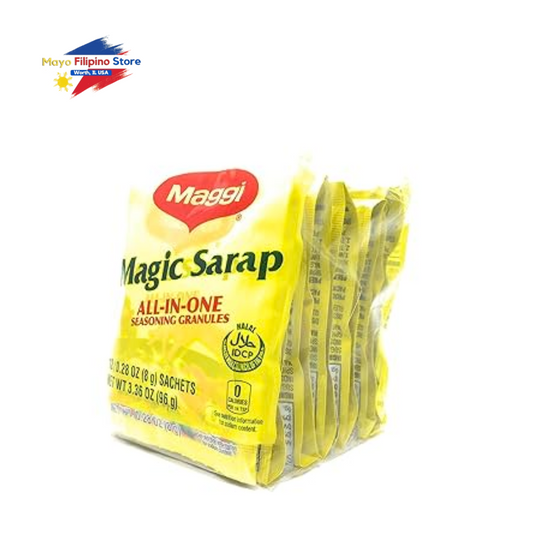
Broth made from chicken, pork bones, or beef shank has plenty of flavor, but bouillon cubes and seasoning granules are still common in everyday Filipino cooking. Knorr Chicken Cubes, chicken powder, and similar seasonings help build a reliable broth quickly. They are useful for tinola, arroz caldo, sopas, and noodle soups, particularly when working with boneless chicken or a short cooking time.
Use them as support, not as the only flavor. Too much can make a clear soup taste flat or overly salty. Pair a small amount with sauteed garlic, onion, ginger, fish sauce, and the natural juices from the meat. This approach creates a fuller broth without losing the clean flavor that makes Filipino soups so easy to eat.
Rice, noodles, and pasta
A Filipino soup pantry should have more than one starch. Rice turns chicken and ginger broth into arroz caldo or lugaw, while glutinous rice creates a thicker, softer texture. Regular long-grain rice works for a lighter porridge, although it will not become as creamy as sticky rice.
For noodle soups, keep pancit canton, bihon, miki, or egg noodles based on what your household enjoys. Pancit mami often uses fresh egg noodles, but dried noodles are convenient and hold well in the pantry. Sotanghon, or mung bean vermicelli, is another excellent choice for chicken sotanghon soup. It cooks quickly and absorbs the broth, so add it near the end and allow extra liquid.
Elbow macaroni belongs in the pantry, too, for creamy Filipino chicken sopas. The pasta gives sopas its familiar, filling texture, especially with shredded chicken, cabbage, carrots, and evaporated milk.
Evaporated milk for chicken sopas
Creamy chicken sopas has a place of its own among Filipino comfort foods. Evaporated milk gives the soup its signature richness without making it as heavy as cream. Add it after the macaroni and vegetables are mostly tender, then keep the heat low to prevent scorching.
The milk is optional in some households, and that is a valid choice if you prefer a clearer chicken macaroni soup. For the classic creamy version, however, canned evaporated milk is one of the essential Filipino soup ingredients to have ready. Shelf-stable cans are especially useful for quick family meals.
Dried shrimp, shrimp paste, and seafood flavor
Dried shrimp can bring concentrated seafood flavor to soups with vegetables, noodles, or squash. It is particularly helpful when fresh shrimp is not part of the meal but you want a deeper coastal flavor. Rinse dried shrimp briefly before cooking if it is very salty, then saute it with garlic and onion or simmer it in the broth.
Bagoong, or shrimp paste, is more often used as a condiment or in dishes like pinakbet, but a small amount can add complexity to certain vegetable broths. Use it carefully. Its strong flavor is delicious with the right ingredients, yet it can take over a delicate chicken or fish soup.
Fresh Ingredients That Finish the Pot
Pantry staples set the direction, but fresh vegetables make Filipino soup feel complete. Water spinach, or kangkong, is a natural choice for sinigang. Add it near the end so the leaves stay green and tender. Daikon radish, eggplant, okra, long beans, taro, tomatoes, and green chiles are also familiar sinigang additions, though the exact combination depends on the protein and family preference.
Tinola usually calls for green papaya or chayote and leafy greens such as malunggay leaves, spinach, or chili leaves. Green papaya offers a mild sweetness and tender texture. Chayote is easier to find in many US supermarkets and makes a dependable substitute, though it has a slightly different bite.
For nilaga, cabbage, potatoes, corn, saba bananas, and pechay create a gentle, hearty soup around beef or pork. The key is timing: cook dense vegetables first, then add leafy greens shortly before serving. Overcooked greens can cloud a clean broth and lose their fresh texture.
Build Flavor in the Right Order
Good Filipino soup often comes down to sequence. Saute garlic, onion, ginger, or tomatoes first when the recipe calls for it. This simple step develops flavor before water or stock dilutes the aromatics. Brown pork or chicken lightly if you want a richer base, but skip aggressive browning for soups meant to stay pale and clean, such as tinola.
Once liquid is added, let tougher cuts simmer until tender before adding quick-cooking vegetables, noodles, or greens. Taste near the end, then adjust with patis, salt, pepper, or a little more souring agent. For sinigang, wait until the meat is tender before finalizing the sourness. Long cooking can soften a sharp broth, and adding all the tamarind mix at the beginning may make it harder to control.
A Pantry That Makes Familiar Meals Easier
You do not need every ingredient at once. Start with fish sauce, tamarind soup mix, ginger, chicken seasoning, rice or noodles, and evaporated milk. From there, choose fresh proteins and vegetables based on the soup your family wants that week. Mayo Filipino Store helps bring these recognizable Filipino pantry staples closer to home, so a comforting pot of soup can be part of an ordinary dinner, not only a special craving.
Keep the basics within reach, and let the season, your schedule, and your family’s favorite flavors decide what goes into the pot.
Shop now at www.MayoFilipinoStore.com for delivery across the USA! 🇺🇸🇵🇭