
A Guide to Filipino Vinegar Types for Your Kitchen
Ibahagi
A bottle of vinegar belongs beside the fish sauce, soy sauce, and calamansi in a Filipino kitchen. This guide to Filipino vinegar types helps you choose the right one for adobo, sawsawan, paksiw, pickles, and everyday rice meals. While any vinegar can add acidity, Filipino varieties bring their own flavor, aroma, and connection to regional cooking.
For many Filipino households, vinegar is not just a finishing condiment. It is a cooking ingredient, a dipping sauce base, and a practical pantry staple that can last through many meals. The best choice depends on whether you want a clean sourness, a deeper fermented character, a little sweetness, or enough strength to stand up to rich meats and fried food.
What Makes Filipino Vinegar Different?
Filipino vinegar, often called suka, is made from locally available ingredients such as coconut sap, sugarcane, nipa palm sap, rice, or fermented fruits. The result is a broad family of vinegars rather than one single flavor. Some are clear and mild, while others are dark, aromatic, and pleasantly funky from natural fermentation.
That variety matters in familiar dishes. A mild cane vinegar can brighten a simple dipping sauce without taking over. A fuller-bodied coconut vinegar can give adobo more depth. A strong palm-based vinegar may be exactly what you want beside crispy lechon or fried bangus.
Color alone is not a reliable measure of intensity. A clear vinegar can be sharp, and a darker vinegar can taste rounded or lightly sweet. Read the label, consider the ingredient base, and taste a small amount before using a new bottle in a dish where vinegar is the main flavor.
Guide to Filipino Vinegar Types: The Main Styles
Cane vinegar
Cane vinegar, or sukang tubo, is made from sugarcane. It is one of the most useful all-purpose vinegars for a Filipino pantry because it is usually clean, tangy, and less aggressive than distilled white vinegar. Many brands have a lightly golden color and a subtle sweetness that works well in cooking and dipping sauces.
Use cane vinegar for chicken or pork adobo, atsara, and a quick sawsawan with chopped garlic, black pepper, and fresh or dried chiles. It is also a reliable choice when a recipe simply says “vinegar” without naming a particular type. If you are new to Filipino cooking, this is often the easiest bottle to start with.
The trade-off is that cane vinegar may not offer the deep savory character some cooks want in traditional regional dishes. It is versatile, but its mild profile can fade behind heavily seasoned meats, lots of soy sauce, or bold bagoong.
Coconut vinegar
Coconut vinegar, called sukang niyog, is made from fermented coconut sap or coconut water, depending on the product. It has a rounded acidity and a gentle fermented aroma that makes it especially good for dishes with seafood, vegetables, and coconut-based flavors.
Try it in paksiw na isda, ginataang dishes that need a little lift, or a dipping sauce for grilled seafood. Coconut vinegar also works beautifully in adobo when you want a softer, more layered sourness rather than a very sharp finish.
Its flavor can vary considerably by brand. Some bottles taste mild and almost neutral; others have a fuller aroma that is more noticeable in uncooked sauces. If your family has a preferred brand, that familiarity often matters more than choosing by category alone.
Nipa palm vinegar
Nipa palm vinegar, or sukang sasa, comes from the sap of the nipa palm. It is associated with coastal and southern Philippine food traditions and is often known for a stronger, more earthy fermented profile. Depending on the producer, it may be pale, amber, or darker in color.
This vinegar is a good match for grilled meat, fried fish, kinilaw-style preparations, and bold sawsawan. Mix it with garlic, onions, chiles, and a pinch of salt for a dipping sauce that can cut through rich liempo, crispy pata, or lechon. Its distinct personality is the point, so use it when you want the vinegar to be noticed.
For delicate dishes, start with less than the recipe calls for and adjust. Nipa vinegar can be more assertive than cane vinegar, and swapping it one-for-one may change the final balance.
Tuba vinegar
Tuba vinegar is made from fermented coconut palm sap, closely connected to tuba, a traditional palm wine. It is commonly called sukang tuba and can range from lightly sour to deeply tangy, with a naturally fermented flavor that feels more rustic than distilled vinegar.
It is especially useful in Visayan-style cooking, marinades, and dipping sauces served with grilled or fried food. Sukang tuba can bring a satisfying edge to pork adobo or chicken inasal-style sauces, where garlic, pepper, and citrus may also be present.
Because fermentation gives it character, tuba vinegar may taste different from bottle to bottle. That is not a flaw. It is part of what makes it appealing to cooks looking for a more traditional, less uniform flavor.
Rice vinegar
Rice vinegar is familiar across many Asian kitchens and is sometimes used in Filipino homes for its mild, clean acidity. It is usually softer and slightly sweeter than standard white vinegar, making it useful for quick pickles, salad-style vegetable dishes, and sauces where you do not want a strong fermented note.
It can stand in for cane vinegar in a pinch, particularly for atsara or a simple dipping sauce. Still, it does not always taste distinctly Filipino in dishes built around suka. If you are recreating a family adobo recipe, cane, coconut, or tuba vinegar will usually deliver a closer flavor.
Distilled white vinegar
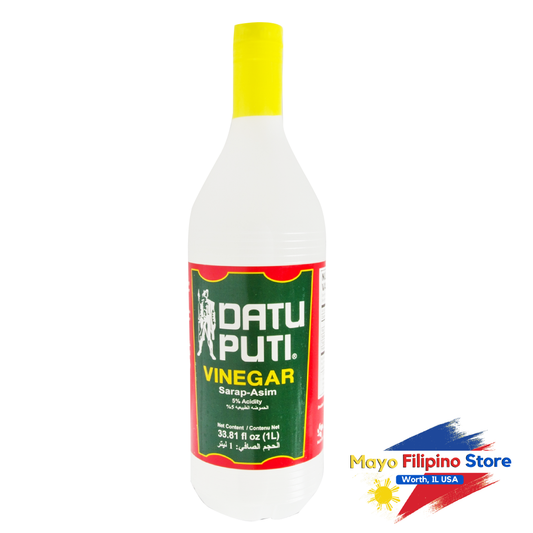
Distilled white vinegar is widely available in the United States, inexpensive, and very sharp. It is practical for cleaning and pickling, and some Filipino recipes do use it. For cooking, though, it can taste harsher than traditional cane or coconut vinegar if used without adjustment.
When it is your only option, use a little less at first. A small splash of water, a touch of sugar, or additional aromatics can help soften the edge in a sawsawan. It works best when garlic, peppercorns, bay leaves, soy sauce, or chiles have enough time to balance it.
Choosing Vinegar for Filipino Dishes
For adobo, cane vinegar is the dependable everyday choice. Coconut vinegar gives a rounder, gentler result, while tuba or nipa vinegar adds more fermented depth. There is no single correct bottle because adobo varies by household, province, and personal taste. Some cooks prefer to simmer the vinegar without stirring at first; others want the bright aroma to remain more pronounced. Your vinegar choice shapes that decision.
For sawsawan, choose based on what is on the plate. Cane vinegar is friendly and flexible for lumpia, fried chicken, and barbecue. Nipa or tuba vinegar is excellent with fatty pork and grilled seafood. Coconut vinegar is a pleasant match for fish and vegetable dishes. Add garlic, onion, siling labuyo, cracked pepper, or a little soy sauce to build the sauce around the vinegar rather than hiding it.
For paksiw and fish dishes, coconut or cane vinegar provides acidity without overwhelming the fish. For atsara and other pickled vegetables, cane vinegar gives a balanced base, although white vinegar can work when you want a brighter, firmer pickle. For kinilaw, use a vinegar you enjoy uncooked. Its aroma will be front and center, so a naturally fermented coconut, tuba, or nipa vinegar can make a noticeable difference.
How to Stock and Use Vinegar at Home
A Filipino pantry does not need every vinegar type at once. Start with cane vinegar for daily cooking, then add coconut or tuba vinegar when you want more regional character. If your household cooks a lot of grilled food, fried fish, or lechon-style dishes, a bolder nipa or tuba vinegar is worth keeping nearby.
Store unopened and opened bottles in a cool, dry cabinet with the cap tightly closed. Vinegar is naturally shelf-stable, though sediment or changes in color can occur in traditionally fermented products. That does not automatically mean the vinegar has spoiled. Check the label guidance and use your senses if you are unsure.
When shopping for Filipino pantry staples, look for products labeled suka, sukang tubo, sukang niyog, sukang sasa, or sukang tuba. Mayo Filipino Store makes it easier to keep familiar condiments and cooking essentials together with the noodles, frozen favorites, and pantry ingredients that turn one bottle of vinegar into a complete Filipino meal.
The most useful bottle is the one that makes you want another spoonful of adobo sauce or another piece of lumpia. Keep a versatile cane vinegar on hand, then let coconut, tuba, and nipa vinegars bring back the flavors your family recognizes or introduce a new favorite to the table.